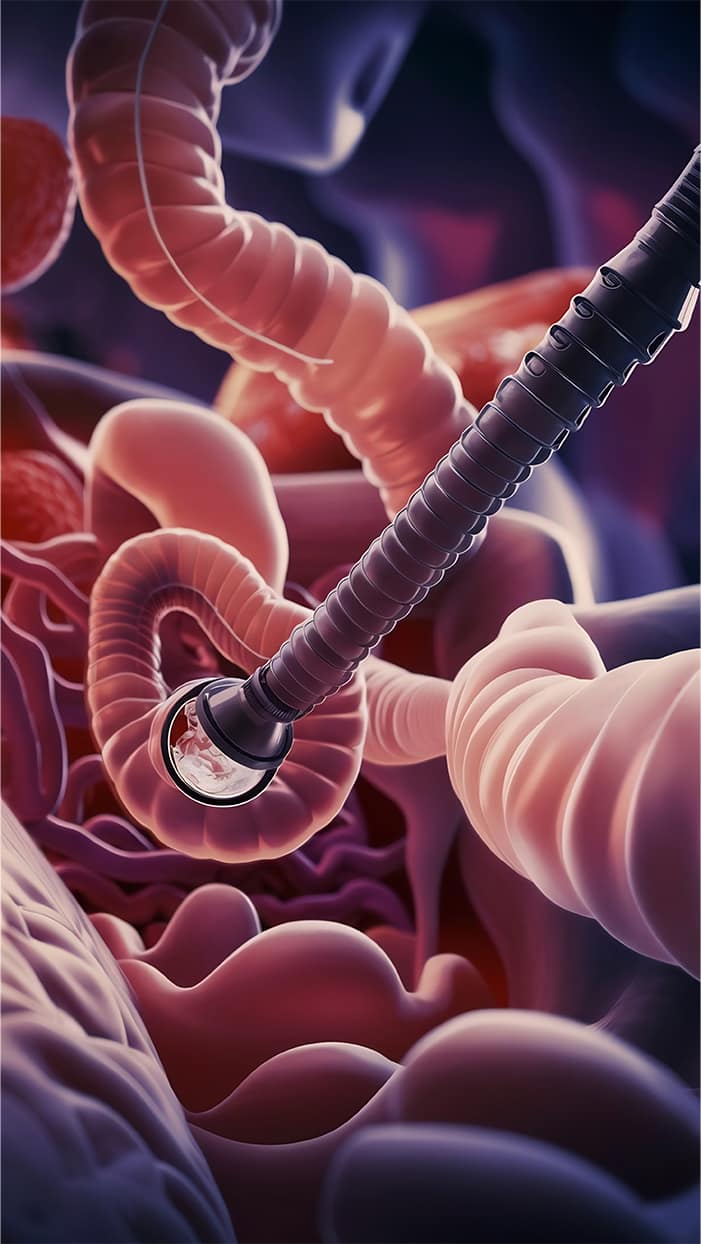
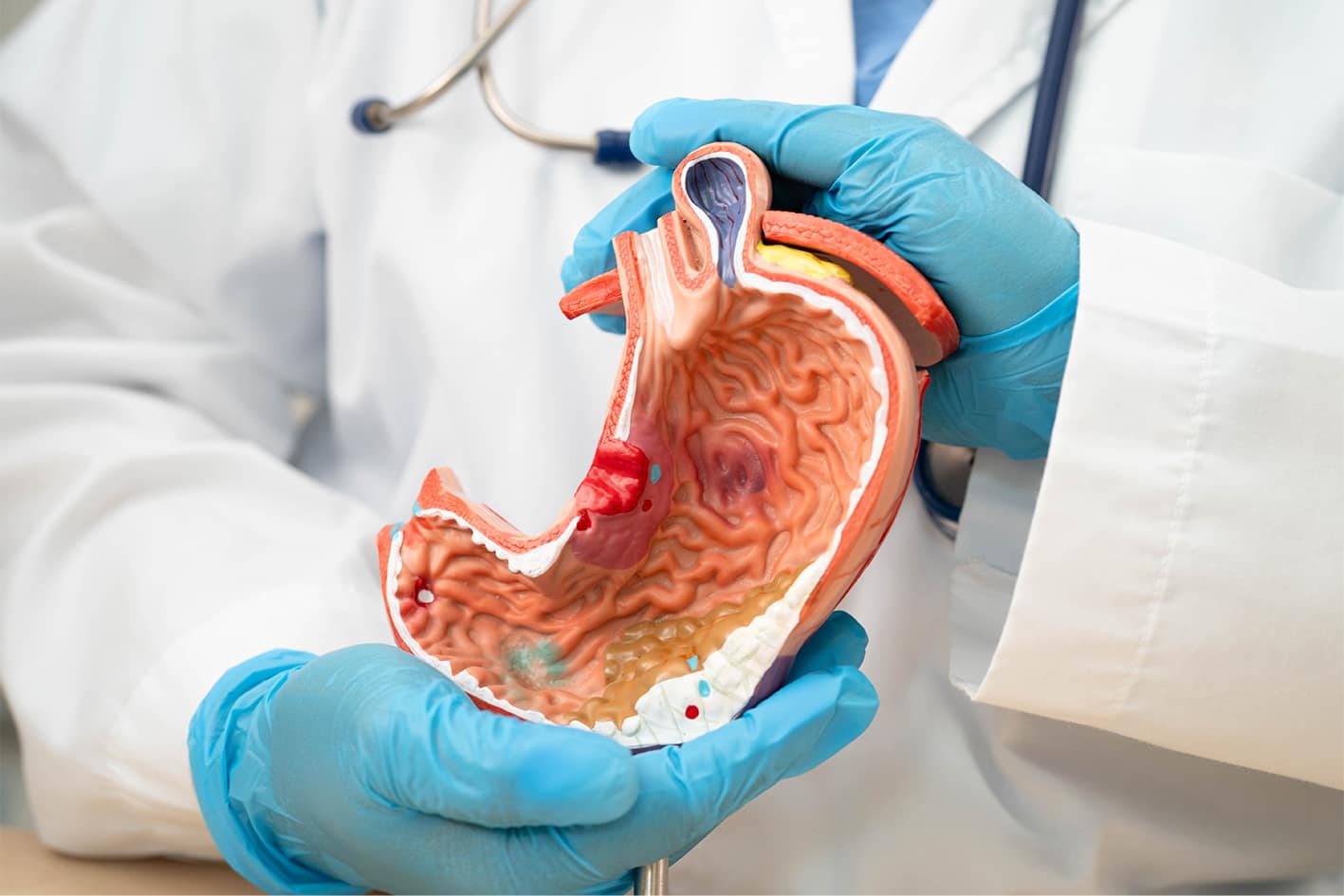
Oesophagogastroduodenoscopy (OGD) / Upper Gastrointestinal Endoscopy
Full Name:
Oesophagogastroduodenoscopy (OGD), also known as Upper Gastrointestinal (GI) Endoscopy.
Examination Area:
A flexible endoscope is passed through the mouth to examine the oesophagus, stomach, and duodenum (the first part of the small intestine).
Main Purposes:
- Diagnose gastric (stomach) ulcers
- Detect gastritis
- Identify Helicobacter pylori (H. pylori) infection
- Screen for and detect early-stage gastric cancer
- Investigate symptoms such as persistent upper abdominal pain, acid reflux, difficulty swallowing, nausea, or unexplained gastrointestinal bleeding
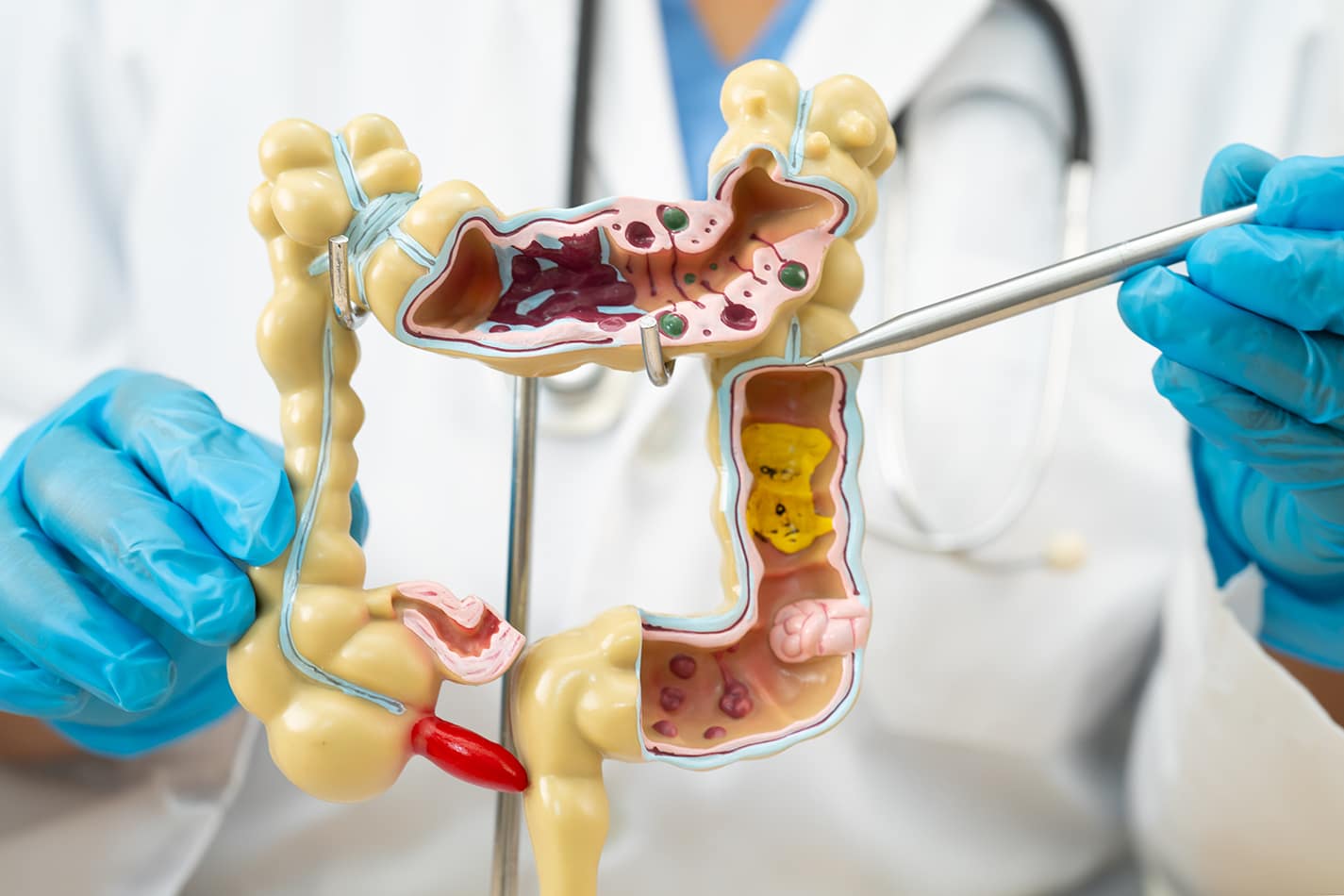
Colonoscopy
Procedure: A flexible endoscope is inserted through the anus to examine the entire colon and rectum.
Purpose: Used to detect colorectal polyps, inflammation, ulcers, and other bowel abnormalities, as well as to screen for and diagnose colorectal cancer at an early stage.
Preparation & Procedure
Dietary Adjustment:
Begin a low-fibre diet three days before the examination and follow a light diet on the day before the procedure.
Bowel Preparation:
Patients undergoing colonoscopy will need to take a prescribed bowel-cleansing solution to ensure the colon is completely cleared.
Fasting:
No food or drinks for approximately 6–8 hours before the procedure.
Anaesthesia (MAC):
Administered by a specialist anaesthesiologist, MAC provides a comfortable sedation experience while allowing patients to maintain spontaneous breathing.
Duration:
Most endoscopic procedures take approximately 10–45 minutes to complete.